
Parking Areas: A Hidden Source of CO₂ Accumulation
Underground and enclosed parking facilities trap vehicle exhaust in confined spaces. While ventilation systems are designed to manage CO, they do not reduce CO₂ — they simply push it outside. As a result, every arrival and departure increases the local carbon load, creating a measurable environmental impact around the property.
Ventilation Alone Doesn’t Solve the Problem
Traditional ventilation systems dilute and relocate emissions rather than eliminate them. CO₂ is continuously expelled into the surrounding environment, contributing to localized pollution and negatively affecting the site’s environmental profile. For modern ESG‑driven properties, this gap is becoming increasingly visible.

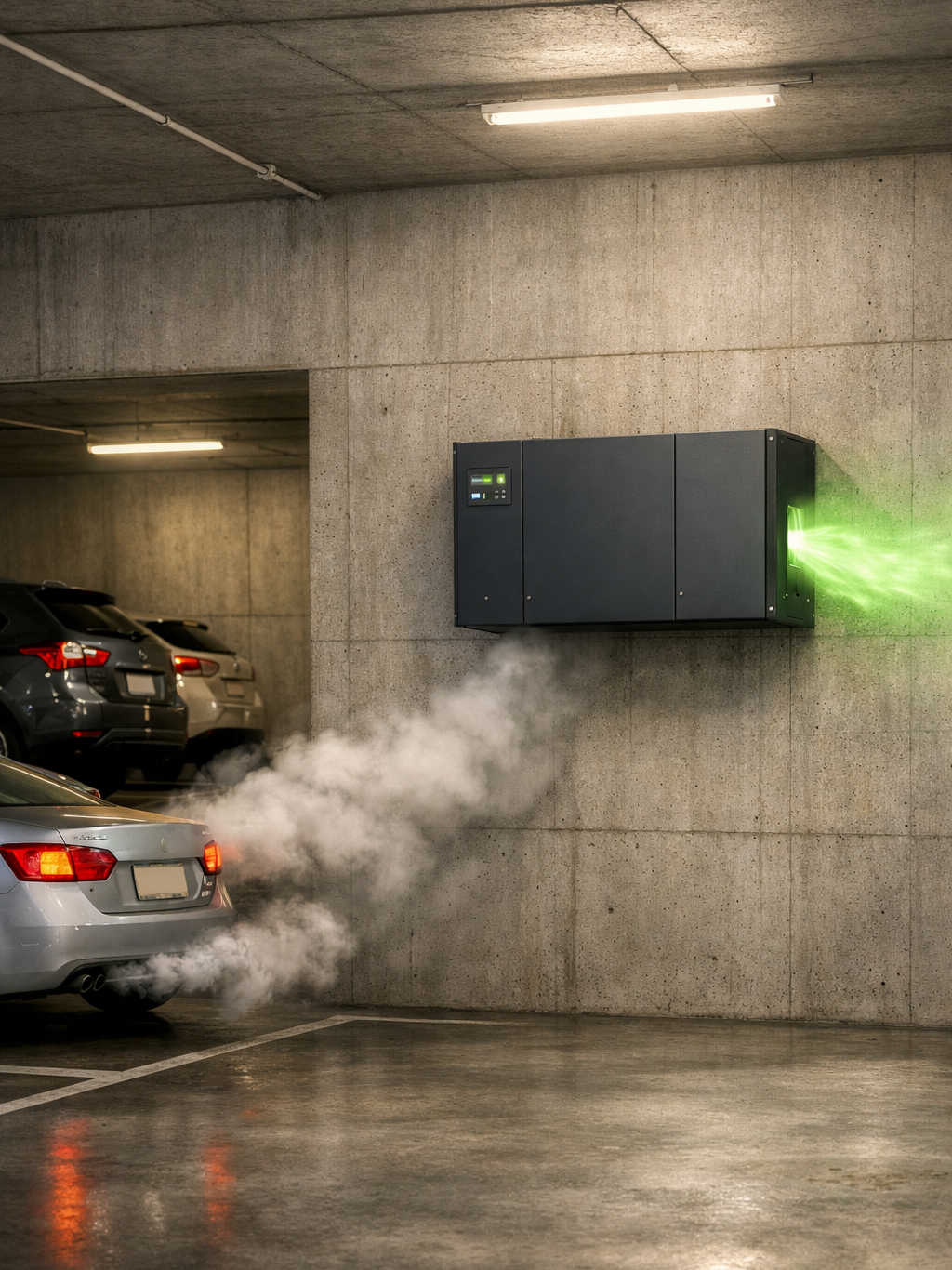
CO₂ Filtration Turns Emissions Into Improvement
Dedicated filtration captures part of the CO₂ load before it escapes outdoors. This transforms parking areas from passive emitters into active points of environmental enhancement.
The result: cleaner air, reduced localized emissions, and a tangible improvement in the property’s sustainability metrics.
Strengthening ESG Performance and Investor Confidence
CO₂ filtration provides measurable, reportable environmental benefits that directly support ESG frameworks.
It demonstrates proactive responsibility, aligns with modern sustainability expectations, and enhances the property’s appeal to tenants, investors, and auditors who prioritize environmental maturity.
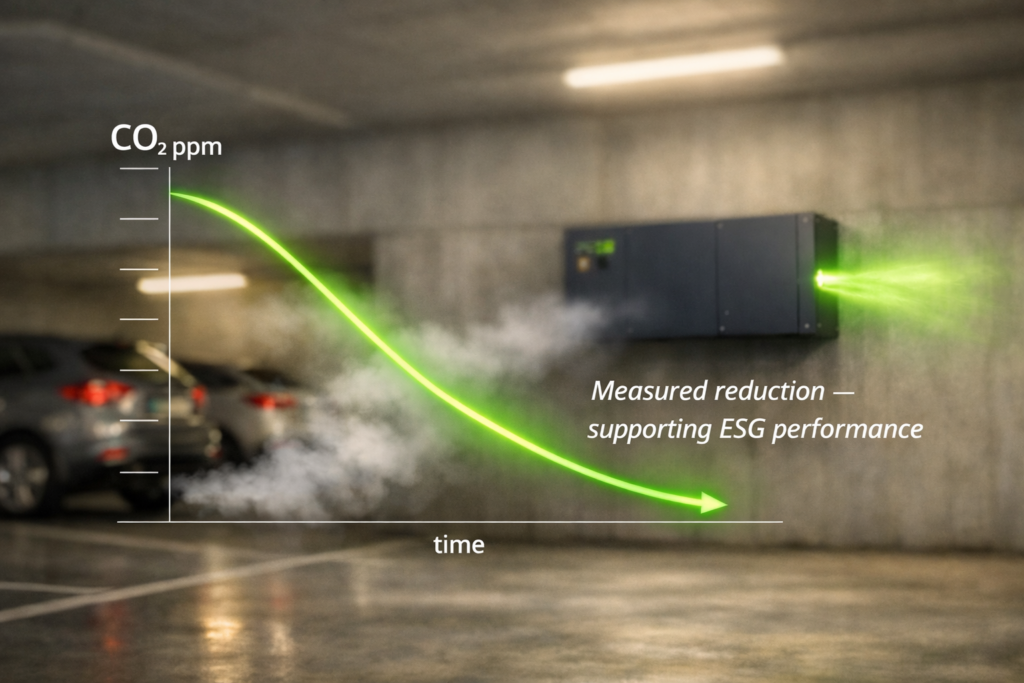

A Step Toward a Cleaner, More Responsible Future
Filtration is not only about improving air quality in parking areas — it’s about elevating the environmental integrity of the entire site.
By reducing emissions at the source, properties contribute to a cleaner urban environment and take a meaningful step toward a more sustainable future.